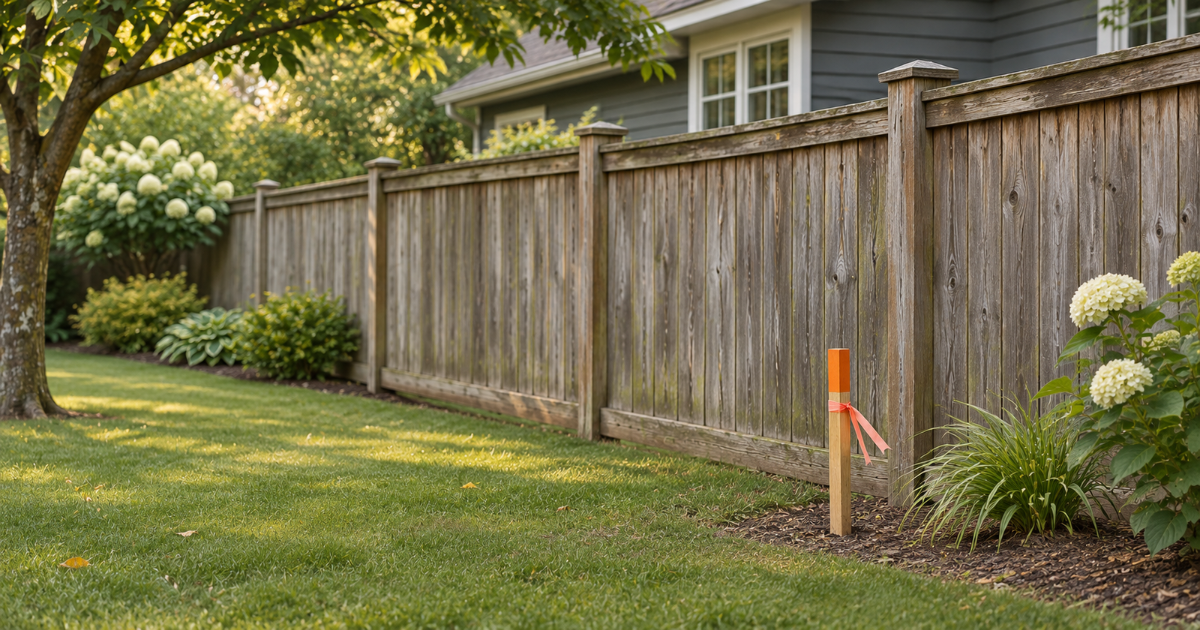
Boundary Disputes in California: Where to Start
Boundary disputes in California usually doesn’t start with a lawsuit. They starts with a fence, a survey, or a neighbor’s new construction that doesn’t line up with what everyone assumed the property line was. Where you go from there, a conversation, a written agreement, or a court case, depends on which legal doctrine actually applies to the disagreement.
Most boundary disputes turn out to be less about where the line is on paper and more about what has to happen before anyone can enforce it.
Quick Take
| Common Misconception | What California Law Actually Says |
|---|---|
| A fence that’s been there for years is the property line | Long acquiescence alone isn’t enough; the agreed-boundary doctrine requires proof the original line was uncertain and that neighbors agreed to fix it there |
| Living on a strip of land for years automatically gives you ownership | Adverse possession requires five continuous years of fenced or cultivated use, plus payment of all property taxes on that land during that period |
| A survey always settles the dispute | A survey helps clarify facts, but only a court, often through a quiet title action, can finally determine competing claims to title |
| Only a lawsuit can resolve a boundary disagreement | Civil Code § 841 already presumes neighbors split the cost of a boundary fence, and many disputes resolve through notice and negotiation first |
The Takeaway: A fence, a survey, and a deed can each say something different, and which one controls depends on which legal doctrine actually applies.
💡 Pro Tip: Before assuming a long-standing fence settles anything, pull your deed and any recorded survey. Whether the fence matches the legal description, or has quietly drifted from it, changes which legal path applies.
Table of Contents
→ Why a Fence Isn’t Always the Boundary in California
→ When a Long-Standing Fence Line Can Still Become the Boundary
→ Can Adverse Possession Move the Boundary Line?
→ How Is a Boundary Dispute Actually Resolved in Court?
→ The Bottom Line on Boundary Disputes in California
→ FAQ: Common Questions
Why a Fence Isn’t Always the Boundary in California
A fence marks where neighbors have treated the property line as being, not necessarily where it actually sits under the deed. Civil Code § 841 presumes neighbors equally share the reasonable cost of a boundary fence, triggered by at least 30 days’ written notice before work begins, but that presumption can be rebutted if a neighbor shows by a preponderance of the evidence that an equal split would be unjust. None of this says anything about where the legal boundary actually is.
Confusing the two is the most common mistake in these disputes. A fence can be entirely wrong, and both neighbors can still be required to split its upkeep.
Not sure which doctrine applies to your fence line?
James White can walk through the specific facts of your situation with you.
When a Long-Standing Fence Line Can Still Become the Boundary
Under California’s agreed-boundary doctrine, a fence can become the actual property line, but only if three things are true: the true boundary was uncertain, the neighbors agreed to treat the fence as the line, and that agreement was accepted and acquiesced to for a period equal to the statute of limitations.
The California Supreme Court applied this test in Bryant v. Blevins, holding that long acquiescence in a fence’s location isn’t enough on its own. Without evidence the original line was actually uncertain and that neighbors agreed to fix it there, a fence doesn’t override a recorded deed or survey.
Can Adverse Possession Move the Boundary Line?
Adverse possession is a separate, stricter path. Under Code of Civil Procedure § 325, a claimant must show the disputed strip was fenced or substantially cultivated, and occupied continuously for five years.
What trips up most claims: the statute also requires the claimant to have paid all property taxes assessed on that land for the full five years, proven through certified county tax records. Without that, physical use alone doesn’t establish adverse possession, no matter how long it lasted. See the full text of CCP § 325 for the statutory language.
How Is a Boundary Dispute Actually Resolved in Court?
When neighbors can’t agree, a quiet title action asks the court to determine who holds title to the disputed strip. Under Code of Civil Procedure § 761.020, the complaint must describe the property, state the basis for the plaintiff’s claimed title, including the specific facts if based on adverse possession, and identify the competing claims the court is asked to resolve.
Filing isn’t always the first step. Talking through the specifics with an attorney first can clarify which doctrine actually applies, which saves time either way.
The Bottom Line on Boundary Disputes in California
A fence, a survey, and a deed can all say something different about where a property line sits, and California law doesn’t treat them as interchangeable. The agreed-boundary doctrine, adverse possession, and a quiet title action each apply to a different kind of disagreement, and picking the wrong one wastes time before the real dispute gets addressed.
What a court ultimately decides depends on the specific facts and documentation in front of it.
If a boundary disagreement is already underway, sorting out which doctrine fits is the first real step, not the last.
Dealing With a Fence Line or Boundary Dispute?
James White works with San Diego homeowners to sort out which legal doctrine actually applies before a disagreement escalates.
This post is for informational purposes only and does not constitute legal advice. Contacting Candid Law APC does not create an attorney-client relationship.
Frequently Asked Questions About Boundary Disputes in California
Does a long-standing fence automatically become the property line in California?
No. Under the agreed-boundary doctrine, a fence only becomes the boundary if the original line was uncertain and the neighbors agreed to fix it there, not simply because the fence has stood for years.
Can I claim part of my neighbor’s land through adverse possession?
Only if the use meets specific requirements, including fencing or cultivation, five continuous years of occupancy, and payment of all property taxes on that land during that time, under Code of Civil Procedure § 325.
Do I have to go to court to resolve a boundary dispute?
Not always. Some disputes resolve through negotiation or a written agreement, but if neighbors can’t agree, a quiet title action asks a court to determine title.
Who pays for a new boundary fence in California?
Civil Code § 841 presumes neighbors split the reasonable cost of a boundary fence equally, after at least 30 days’ written notice. A neighbor can rebut that presumption with evidence, such as a cost disproportionate to the benefit or genuine financial hardship, showing an equal split would be unjust.
What should I check before assuming a fence is in the wrong place?
Start with your deed and any recorded survey. Comparing the legal description to the fence’s actual location determines which legal path, if any, applies.
Latest Posts
 by Kimberly Reynolds
Trust and Estate Disputes in California: A Plain-English Guide
Trust and estate disputes in California usually come from one of two directions: a beneficiary believes a trustee is mismanaging the trust, or a trustee is...
by Kimberly ReynoldsBoundary Disputes in California: Where to Start
Boundary disputes in California usually doesn't start with a lawsuit. They starts with a fence, a survey, or a neighbor's new construction that doesn't line...
by Kimberly ReynoldsPower of Attorney vs. Conservatorship in California
Power of attorney vs. conservatorship. Both let someone else manage your affairs, but they work in very different ways. A power of attorney is a private...